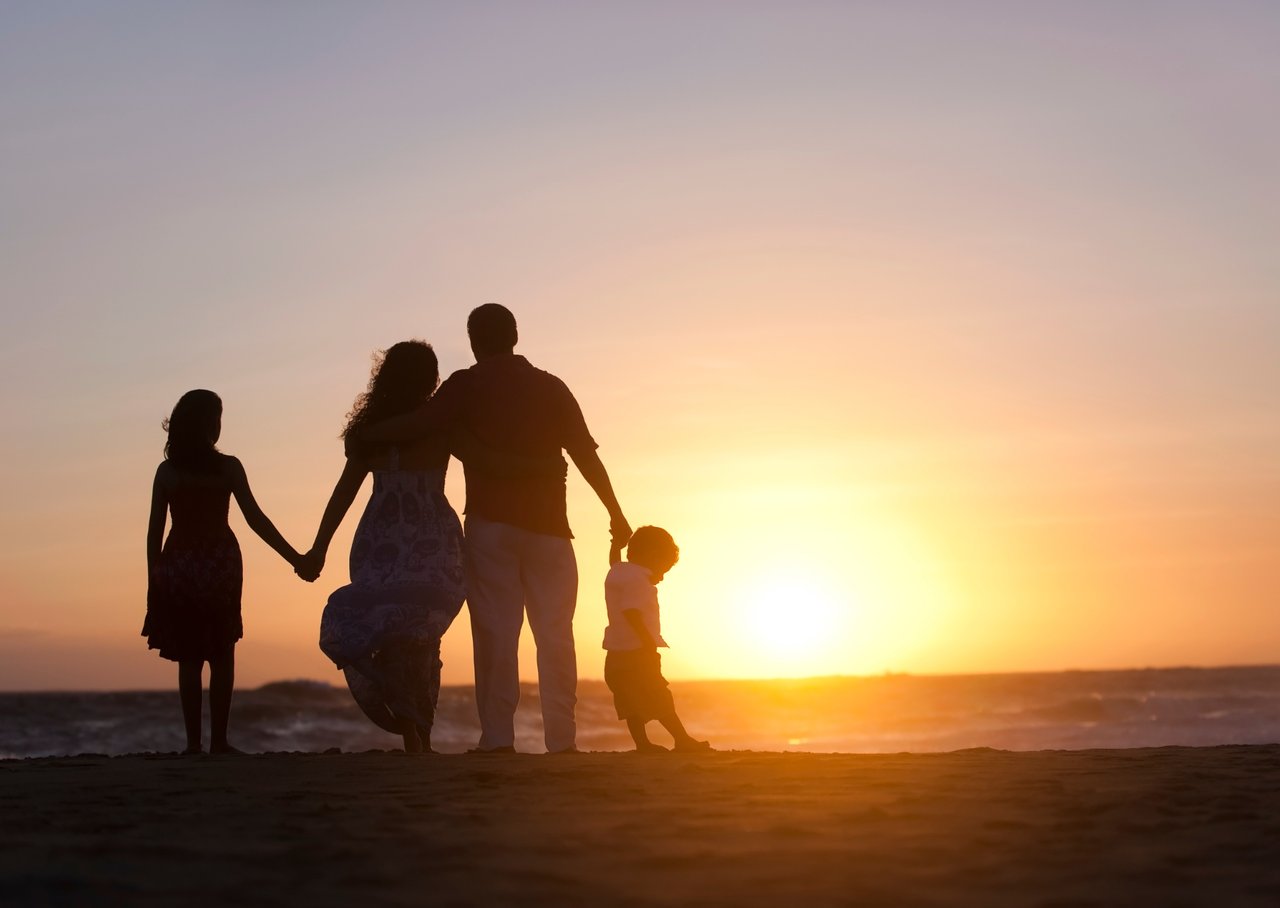
Raising kids in Aruba is, for most families who do it well, one of the better decisions they make. Children grow up multilingual almost by default, spend more time outside than they ever would in colder climates, and develop the kind of easy relationship with the ocean that most adults envy. It's safe, it's social, and it's small in ways that make family life genuinely easier than in bigger places.
That said, "paradise" doesn't describe it accurately. Aruba is a real place with real trade-offs: school choices that take real thought, an island-sized social world that isn't always easy for teenagers, and the practical realities of import-dependent living. Families who arrive expecting an extended vacation tend to struggle. Families who arrive ready to actually live here tend to thrive.
Here's an honest look at what raising a family in Aruba involves.
The Big Picture: A Genuinely Family-Friendly Place
Aruba's day-to-day environment is unusually kind to families. Crime rates are low by Caribbean and global standards. Communities are tight-knit. Kids are welcome almost everywhere, including in restaurants and at adult social events, in a way that families coming from more child-segregated cultures often find surprising and welcome. People know each other. Strangers chat with your kids in the supermarket. Neighbors notice when something is off.
The climate adds a layer most parents don't fully appreciate until they're living it. Year-round warmth means swimming, cycling, hiking, and outdoor play happen 12 months a year, not 3 or 4. The trade winds keep things bearable even in summer. Vitamin D deficiencies, seasonal affective disorder, and the long indoor winters that wear down families in colder places simply don't exist here.
The flip side: the island is small. Roughly 110,000 people. The same children move through the same circles for years, which is wonderful when it works and harder when it doesn't. There's also less variety than larger places offer in terms of activities, specialty services, and academic options. Trade-offs in both directions.
The School Question Is the Biggest One
For most families moving to Aruba (or local families weighing options), school choice is the single biggest decision. There are three main paths.
Public schools follow the Dutch education system, with instruction primarily in Dutch and Papiamento, and English and Spanish introduced from primary level. Primary education (Basisonderwijs) lasts 6 years, followed by secondary tracks: HAVO (5 years, senior general secondary) or VWO (6 years, pre-university). Dutch diplomas are internationally recognized, particularly across Europe. Public education is free, and for children who'll grow up in Aruba long-term or eventually study in the Netherlands, this is a genuinely strong option. The bilingual environment (often four languages by adolescence) is one of the real gifts of the system.
Private and faith-based schools offer alternatives within the local system, often with Catholic or Protestant affiliation. Quality varies, but several have strong reputations. Tuition is meaningfully lower than the international school and the cultural integration tends to be smoother for children who'll stay in Aruba.
The International School of Aruba (ISA) is the main option for families wanting an English-language, American-curriculum education from pre-kindergarten through grade 12. It's the natural fit for families on shorter assignments, families planning to return to North America, or families whose children don't speak Dutch and aren't trying to acquire it. ISA also offers mother-tongue support in Spanish and Dutch. Tuition runs in the range of roughly AWG 13,600 to 30,100 per year depending on grade level, which is significant compared to the local cost of living but in line with international schools across the Caribbean.
There are also Montessori options for early childhood, including the island's first dedicated Montessori school for ages 3 to 6, with bilingual English-Dutch instruction.
The right choice depends almost entirely on how long you plan to be on the island, what languages your kids already speak, and where you envision them going to university. Talk to other parents before committing. School fit matters enormously and isn't always obvious from the websites.
Childcare Is More Affordable Than You'd Expect
For families with younger children, one of the genuine financial advantages of Aruba is that quality childcare costs significantly less than in major North American or European cities. Private daycare and full-day preschool programs typically run roughly USD 140 to 300 per month, which is a fraction of comparable rates in cities like New York, Toronto, London, or Amsterdam.
That said, availability varies, especially for infant care, and the better-known facilities have waitlists. Start the search early if you're planning a move with very young children, and visit in person before signing anything. Quality varies, and the difference between a great daycare and a mediocre one in a small market is bigger than you'd think.
For families with older kids, after-school programs, sports academies, and tutoring services are all available, though the variety is narrower than in larger markets. Music lessons, dance, soccer, sailing, tennis, kitesurfing, and various other activities are all accessible and reasonably priced.
Healthcare Is Good, But Plan Carefully
Aruba has reasonable medical infrastructure for its size. Dr. Horacio E. Oduber Hospital in Oranjestad is the main hospital and handles most routine and emergency care. There are also private clinics, pediatricians, dentists, and specialists across the island. For day-to-day family healthcare, the system works.
For more specialized or complex care, especially in pediatric subspecialties, families sometimes travel to the U.S., the Netherlands, or Colombia. This is common enough that it shouldn't be alarming, but it does mean you need to plan ahead.
Insurance is where families need to pay close attention:
Residents participating in the AZV (Aruba's national health insurance) have access to subsidized care, but coverage details vary by status and you'll want to understand them clearly.
Expatriates not covered by the local system typically use international health insurance, which runs roughly USD 400 per month for a middle-aged adult with comprehensive coverage. Family policies cost more.
Medical evacuation coverage is worth taking seriously. Evacuation flights from the Caribbean can exceed USD 30,000, and you don't want to be making that decision in a crisis.
For families with kids, especially small ones, having a clear plan for both routine care and serious emergencies is part of the basic setup, not an afterthought.
Cost of Living for Families: A Realistic Look
Aruba sits in the upper range for Caribbean destinations on cost of living, reflecting the heavy reliance on imports. For a family of four living comfortably but not extravagantly, monthly expenses tend to break down roughly as follows (in USD, approximate):
Housing: 1,800 to 4,000 depending on size, location, and rental vs. ownership
Utilities (electricity heavy, due to AC): 250 to 500
Groceries: 800 to 1,500
Childcare or school: 280 to 2,500+ depending on choice
Transportation (typically two vehicles): 600 to 1,200 for fuel, insurance, maintenance
Healthcare/insurance: 500 to 1,500 depending on coverage
Activities, eating out, family extras: 400 to 1,000
These are ranges, and real families land all over them. The biggest variables are housing and school, which together can swing a family budget by thousands of dollars a month. The good news is that other categories (childcare, activities, healthcare for routine needs) are often cheaper than what families pay in major North American or European cities.
Coming from New York, San Francisco, or Toronto, Aruba will feel comparable or modestly cheaper. Coming from somewhere lower-cost, brace yourself, especially for groceries and electricity.
Language and Identity for Kids
One of the most lasting benefits of raising children in Aruba is the linguistic environment. Most local kids grow up speaking Papiamento at home, Dutch at school, English from primary level, and Spanish from primary level as well. Many adults are functionally fluent in all four.
For expatriate children, the experience varies:
Kids who arrive young and go through local schools typically become genuinely multilingual within a few years.
Older teens arriving from monolingual environments sometimes struggle to integrate linguistically and benefit from extra support.
The cultural identity piece deserves thought. Children who grow up here often develop a strong "Aruban" or "third-culture kid" identity that's somewhat separate from their parents' home culture. For most families this is a gift; occasionally it's a thing to navigate carefully, especially around return-to-home-country decisions later.
Daily Family Life
The texture of family life in Aruba surprises people in good ways. Some examples of what daily life tends to look like:
Mornings start early because the heat builds quickly. Parents drop their kids off to school and then go to work.
Beach culture is woven into normal life, not a special event. Weekly family swims, beach picnics, and after-school dips are routine.
Eating out is common and family-friendly.
Birthday parties tend to be elaborate and social, often community events rather than small gatherings.
Carnival season (January-February) is a major part of childhood here, with school parades, costumes, and music that becomes part of kids' core memories.
Sundays often revolve around extended family meals, especially in local Aruban families or spending the day at the beach.
The pace is slower than most newcomers are used to. Things take longer. People are less time-obsessed. For families coming from high-pressure environments, this can be the single most healing change. For families addicted to constant productivity, it can be an adjustment.
The Real Challenges
A few honest challenges worth knowing about:
The island is small. Older teenagers in particular sometimes feel the limits of a small social world. Variety in friend groups, dating pools, and after-school activities is narrower than in larger cities. Many families address this through travel, summer programs abroad, and eventually university overseas.
Specialty services for kids with specific needs (advanced gifted programs, certain therapies, specialized medical care) are sometimes available, sometimes not. Families with children who need particular support should research carefully before moving.
Imported everything means inconsistent availability. Specific baby formulas, particular brands of medication, niche school supplies, specialty diets, all of these can be harder to source than at home. Most families adapt within a few months, but it's a real friction point in the early period.
Distance from grandparents and extended family is real for expatriate families. The flip side is that Aruba is well-connected by air to North America and Europe, and the visiting-relatives flow goes both directions.
Climate adjustment for kids sometimes takes longer than parents expect. Heat rashes, sun sensitivity, and adjustment to humidity are common in the first few months. Hats, sunscreen, and hydration become daily habits.
Building a Family Life That Actually Works
The families who thrive in Aruba tend to share a few habits. They get involved in the community, whether through sports clubs, the school PTA, church or other faith communities, or volunteer work. They build friendships that span both expatriate and local circles rather than staying in one bubble. They take advantage of the outdoors regularly, not just on weekends. They establish family routines that aren't dependent on the things they left behind. And they're realistic about what the island offers and doesn't, which lets them appreciate what's actually here rather than missing what isn't.
Raising kids in Aruba isn't a vacation, and it isn't a movie. It's real family life, in a particular place, with particular gifts and particular trade-offs. For families who arrive with that in mind, it can be one of the best chapters of childhood and parenthood both.
Sources
Jarnias Cyril, "Moving to Aruba as an Expat: Complete Guide" — jarniascyril.com
Jarnias Cyril, "Cost of Living in Aruba for Expats" — jarniascyril.com
Pacific Prime, "Expatriate Parenting" — pacificprime.com
Costs, school fees, and immigration requirements change. Verify current specifics with the schools directly, DIMAS (Aruba's immigration department), and qualified local advisors before making relocation decisions.