Most people who live in Santa Cruz treat Arikok National Park the way they'd treat a large backyard: present, permanent, not something you think about until you need it. But the park has two entrances that don't operate as one system, and which one you default to says more about your address inside the district than about the park itself.
San Fuego, the entrance most people picture when they picture Arikok, sits on the northeastern edge of Santa Cruz proper and holds the main visitor center. Vader Piet sits on the park's southeastern border, closer to Savaneta and San Nicolas, and closes half an hour earlier at 3:00 p.m. against San Fuego's 8:00 a.m. to 4:00 p.m. window. There's no lighting anywhere inside the park, so that half hour isn't a rounding error. If you drive in through Vader Piet at 2:00 p.m. planning to loop back out the same way, you're working with a shorter runway than a neighbor who entered through San Fuego at the same time.
Two Gates, Two Different Parks
Here's the part that doesn't show up on the tourist maps: the two entrances don't just have different hours, they front different parts of the park's terrain.
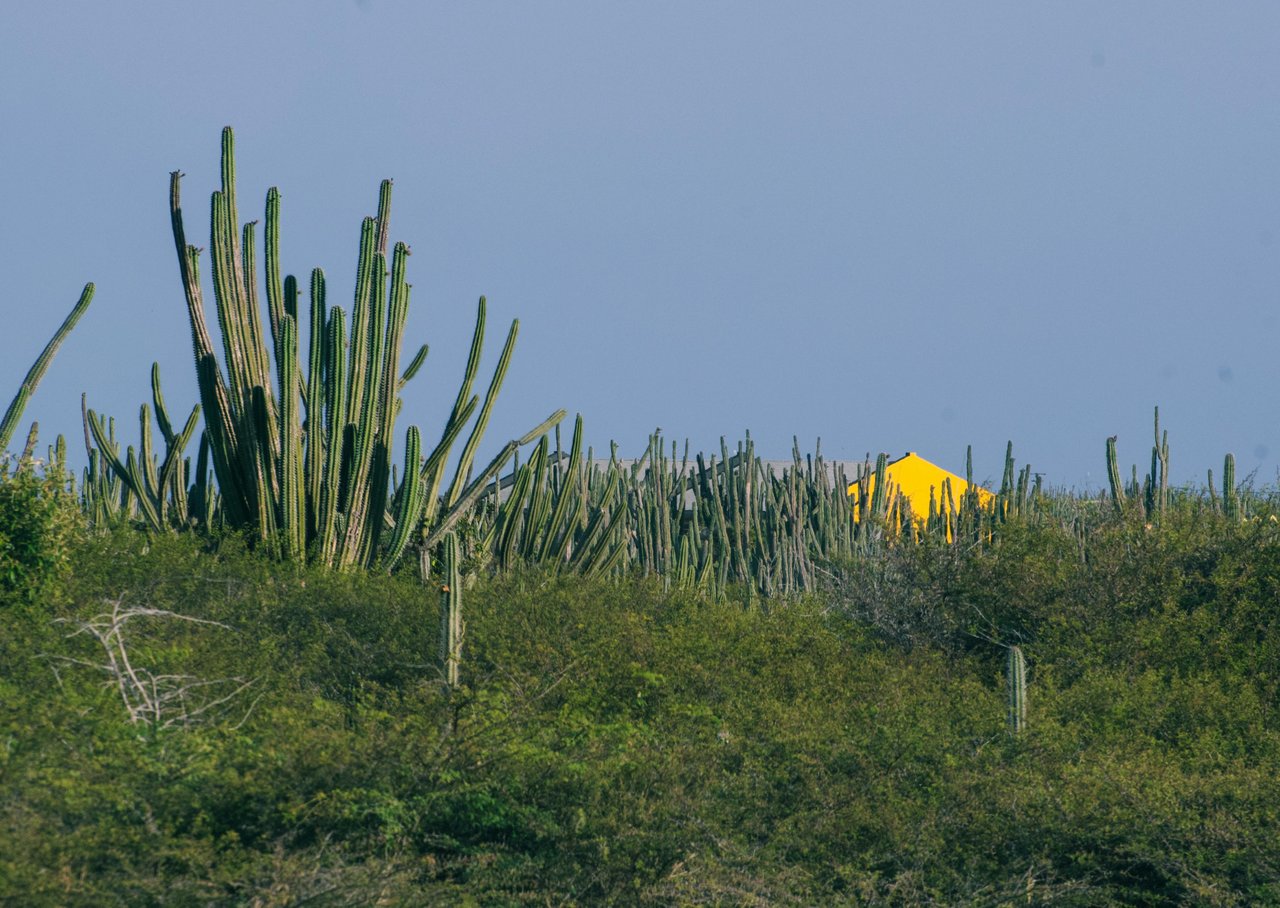
San Fuego is where the Central Activity Zone starts, and it's the gate that puts you closest to the easiest, most rewarding short trail in the whole park: Cunucu Arikok. It's a 45-minute circular walk past a restored adobe farmhouse, complete with the cactus-hedge fencing farmers once used to keep goats out of their bean and corn plots, and rock drawings left by the Caquetío people well before Europeans arrived. Shaded benches are placed along the route, which matters more than it sounds like it should once the sun is fully up.
Vader Piet fronts the South Conservation Zone instead, a quieter, less-trafficked section with five named sites, three reachable by car and two on foot only. If you live on the Savaneta-facing side of Santa Cruz, or you're planning to end your day at Baby Beach, Vader Piet is genuinely the better gate. If you live closer to the district's center or its western neighborhoods and you're drawn to San Fuego purely out of habit, you may be driving past the easy, well-marked loop to reach terrain that requires more time and, in several spots, a 4x4.
There's a simple rule that most longtime visitors have figured out through repetition rather than a map legend:
Enter at San Fuego in the morning, spend your first few hours in the Central Activity Zone, and exit through Vader Piet if Baby Beach or San Nicolas is next on your list. Doing it in reverse means racing Vader Piet's 3:00 p.m. cutoff with the sun already high.
What a Local Discount Actually Buys You
Arikok charges a conservation fee at both entrances, and residents get a discounted rate with a valid government-issued photo ID, a policy the park's own conservation foundation confirms on its site. Visiting family members won't get that same rate. A February 2026 visitor guide put the standard adult admission at $22, with children under 18 free, so if you're the one buying passes for out-of-town relatives during a Christmas visit, budget accordingly and bring your ID to the counter yourself rather than assuming the group rate applies to everyone in the car.
For residents who make it into the park more than a couple of times a year, it's worth asking at the San Fuego visitor center about the annual conservation pass rather than paying the day rate every visit. The park doesn't advertise pricing for it widely, but staff at the entrance can walk you through it on the spot.
The Terrain That Decides Your Route
Beyond Cunucu Arikok, the park's interior splits into terrain that rewards very different kinds of visits. Rooi Tambu, one of the largest natural rainwater discharges on the island, sits in a deep valley where water can linger well into the dry season, and its trail connects all the way to the beaches of Dos Playa for anyone willing to commit to a longer hike. Seroe Arikok, the park's second-highest point at 606 feet, rewards the climb with a sweep of both the calmer western coastline and the rougher eastern shore in a single view.
What Comes After the Trail
The other thing outsiders miss about Santa Cruz is that the park has quietly organized the district's food scene around it. A handful of names keep coming up whenever people ask where to eat after a morning at San Fuego:
- Urataka Center, known locally for pizza with a Caribbean twist and outdoor garden seating, a straightforward stop after a hike when you want beer on tap and don't need a reservation.
- Huchada, A landmark family bakery operating since 1949, located about five minutes from the park's entrance, still selling whole bolos in roughly twenty varieties alongside pastechi and hot dog broodjes for a grab-and-go breakfast before you head in.
None of these are resort restaurants built for cruise traffic. They're the businesses that Santa Cruz residents actually route their Saturdays around, which is a different thing than a curated list of things to do.
The District Behind the Trailhead
Santa Cruz isn't defined only by what borders it. Gilberto François "Betico" Croes, the politician credited as the driving force behind Aruba's 1986 status aparte from the Netherlands Antilles, was born here on January 25, 1938, and the district still carries that history at street level. Plaza Libertador Betico Croes sits at the town's main intersection, and every Dia di Betico on January 25, Santa Cruz sponsors a memorial road race that runs an actual circular route through the district's own residential streets, starting in the early evening specifically to avoid the hotter hours of the day, a scheduling logic that will feel familiar to anyone who's already learned to plan their own park visits around the same sun.
That's the throughline worth sitting with. Santa Cruz residents already build their days around heat, light, and timing without necessarily naming it as a system. The park does the same thing at a larger scale, with two gates that quietly split the district's own relationship to its biggest shared space. Knowing which side of that split your address falls on changes which entrance, which trail, and which post-hike stop actually makes sense for you, rather than the one everyone defaults to out of habit.
If you're thinking about where a home in Santa Cruz fits into the wider Aruban market, or how proximity to Arikok and the district's own rhythm factors into value and lifestyle, we can walk you through it.